YouTube Learning
Vision & First Features
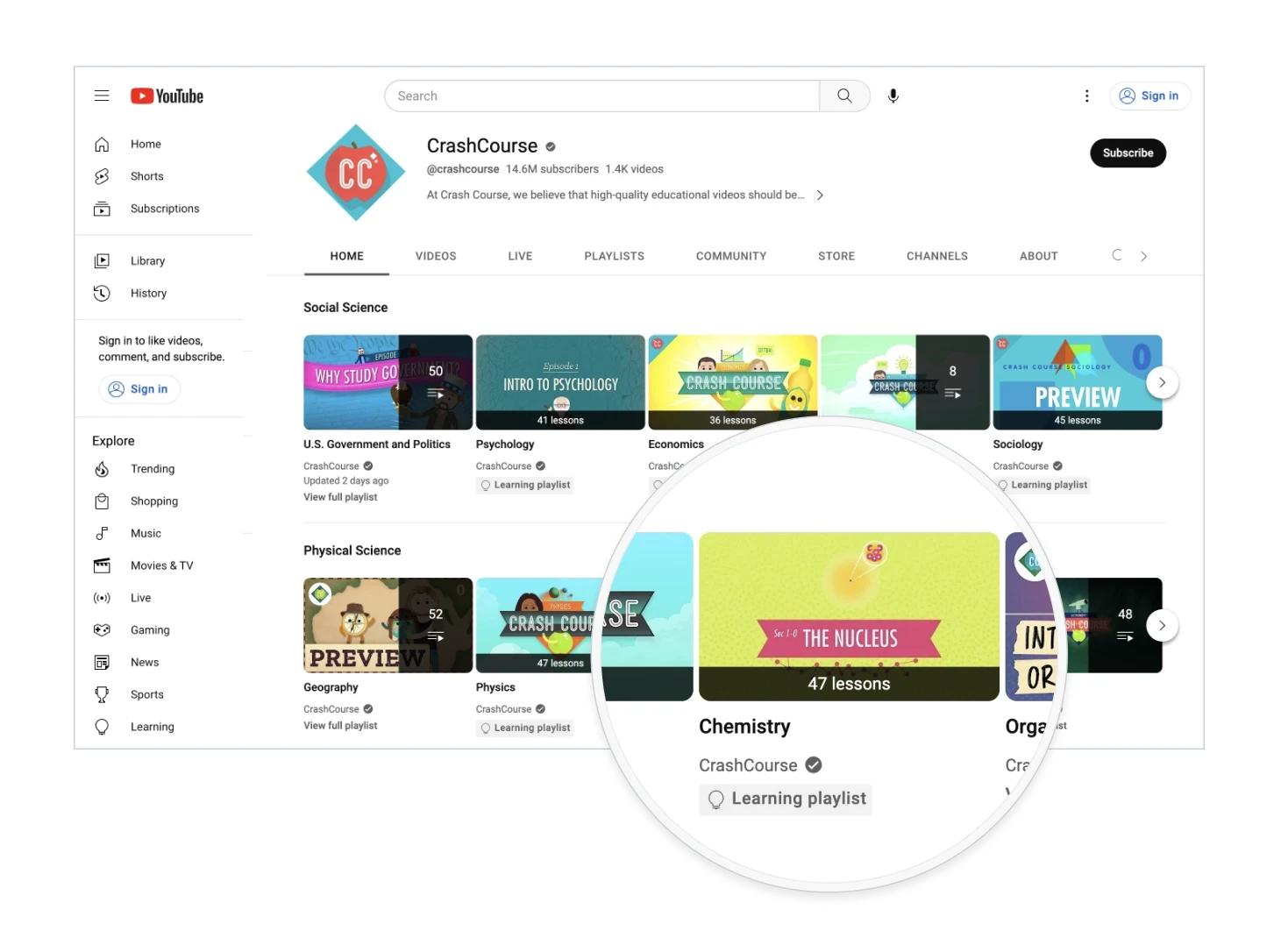
Defining a new product area in an established ecosystem
Director of Product
Director of Engineering
UX Designer
UX Researcher
Volunteer & Rapid UX Researchers
YouTube has long been a global destination for educational content, including How To videos, “edutainment”, and channels on everything from anatomy to zoology. Despite this viewership, learning had no dedicated team or strategy to improve learners' experience.
I played a lead role in the team that established a new vertical, launched the first dedicated feature and created a long term learning vision for the platform.
Understanding the opportunity
User-centered challenge:
How might learners better achieve their goals on YouTube?
Business challenge:
How do we increase watch time of learning content?
To begin making the case for a learning vertical, I sought out other passionate learning supporters and connected with content partner managers who worked with Edutuber channels. We began exploring the opportunities from a business and product perspectives. While they worked to estimate the immense scale of learning content & viewership on the platform, I started using research to gather data on user needs.
Exploratory research
Defining the problem
Given YouTube's popularity for learning content, one of the first questions senior management asked was "why does anything need to change?" We needed better data on learning use cases and how the current product was performing (or not).
With my current team working at capacity on the YouTube Kids app, I enrolled a “20%” volunteer researcher from within the company. We conducted foundational interviews with current YouTube learners, identifying major pain points and sketching out initial critical user journeys.
Pain points in the core learning user journey
“With [other services], you see the puzzle box, you know where you’re going. With YouTube, all you have are the pieces. You don’t even know if the pieces will bring you to a certain picture.”
YouTube Learner Interview
The major needs we discovered were a desire for more organization, wanting additional credibility signals, and a lack of a feeling of progress or accomplishment.
Discover
Find a video
Learner pain points
- Where do I start?
- Who do I trust?
- Is a video up-to-date?
Learn
Watch video(s)
Learner pain points
- No sequential organization
- Recommended videos distracting
- Noisy comments hide valuable ones
Re-engage
Continue another time
Learner pain points
- Can’t easily resume
- No progress indicators
- No encouragement
Complete
Reach a learning goal
Learner pain points
- No sense of ‘done’
- No recognition
- No next steps
Executive support
We shared our research & viewership estimates with the directors of product, engineering, marketing, and content. Representing UX, I collaborated with that group to present a pitch to Susan Wojcicki and Neal Mohan.
We secured staffing for a small core team, including a designer!
User profiles
Most of the conversation around Learning at YouTube focused on content areas like DIY, test prep or academic content. Through foundational user research, we defined a set of initial user profiles based on user goals and behaviors. These profiles brought together disparate subjects and reframed our product strategy discussions:
Efficient searchers
Quickly find an answer and get back to the task at hand
Dedicated learners
Spend some time learning about a subject deeply
Social learners
Engage with others while learning, such as following a favorite Edutuber
We decided to focus on the second two groups, since these “multi-session” users were least satisfied with the current state of the platform.
Designing short and long term
First Feature
Problem: A chaotic place to learn
We targeted top pain points among dedicated & social learners: disorganization & distraction. When watching a video lesson in a series, the YouTube algorithm would randomly recommend videos in the incorrect order or videos from a user's favorite vloggers. Users wasted too much time navigating between videos and refocusing from distractions.
Solution: YouTube Courses
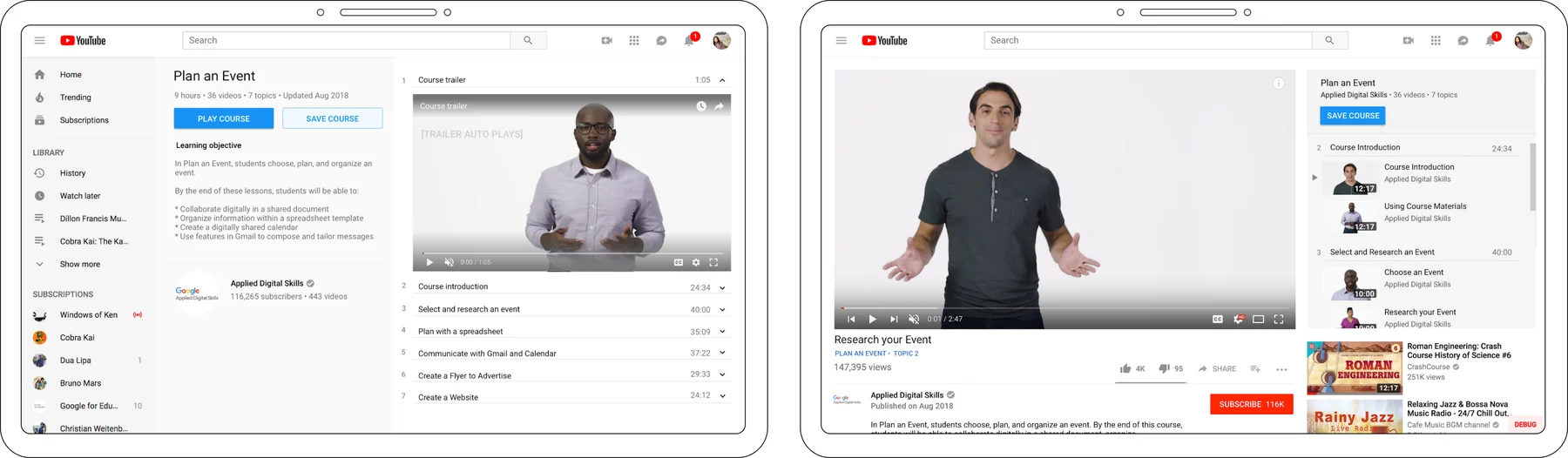
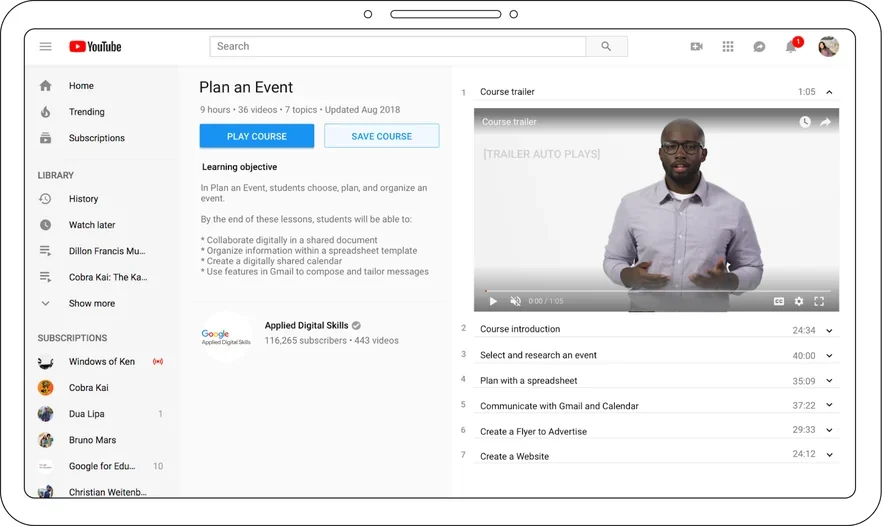
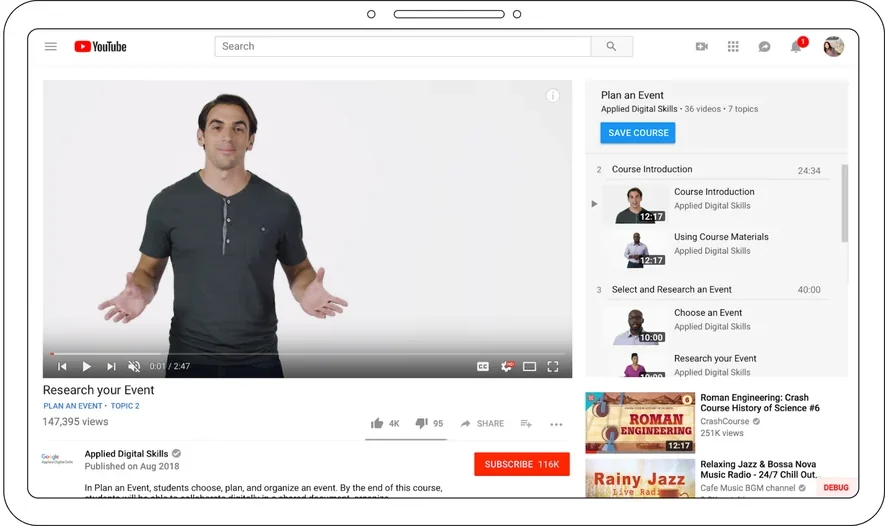
After brainstorming possible features, we decided that we wanted a new base object to introduce into the YouTube ecosystem: courses.
A learning-optimized playlist, courses consisted of an improved landing page with an intro video, a structured playlist design on the watch page, changes in recommended videos and distinct entry points in YouTube’s discovery systems (search, home and recommendations).
The goal of the design was to establish a better learning environment within the YouTube platform and create a space to add dedicated features over time.
Learning Vision
As the first feature was handed off, we began work on a future vision for a long term learning initiative. I had hired a senior team to lead this effort and by this stage, my role had shifted to weekly design reviews.
The team brainstormed feature ideas while looking at the edtech landscape and how YouTube might fit with education initiatives across Google. We hoped to identify YouTube’s unique value, as part of Google’s education offering. Our talented researcher was able to conduct rounds of concept tests with learners & Edutubers.
We presented a Learning Vision to senior stakeholders that included a package of features, united by a common theme, to guide work in the coming years.
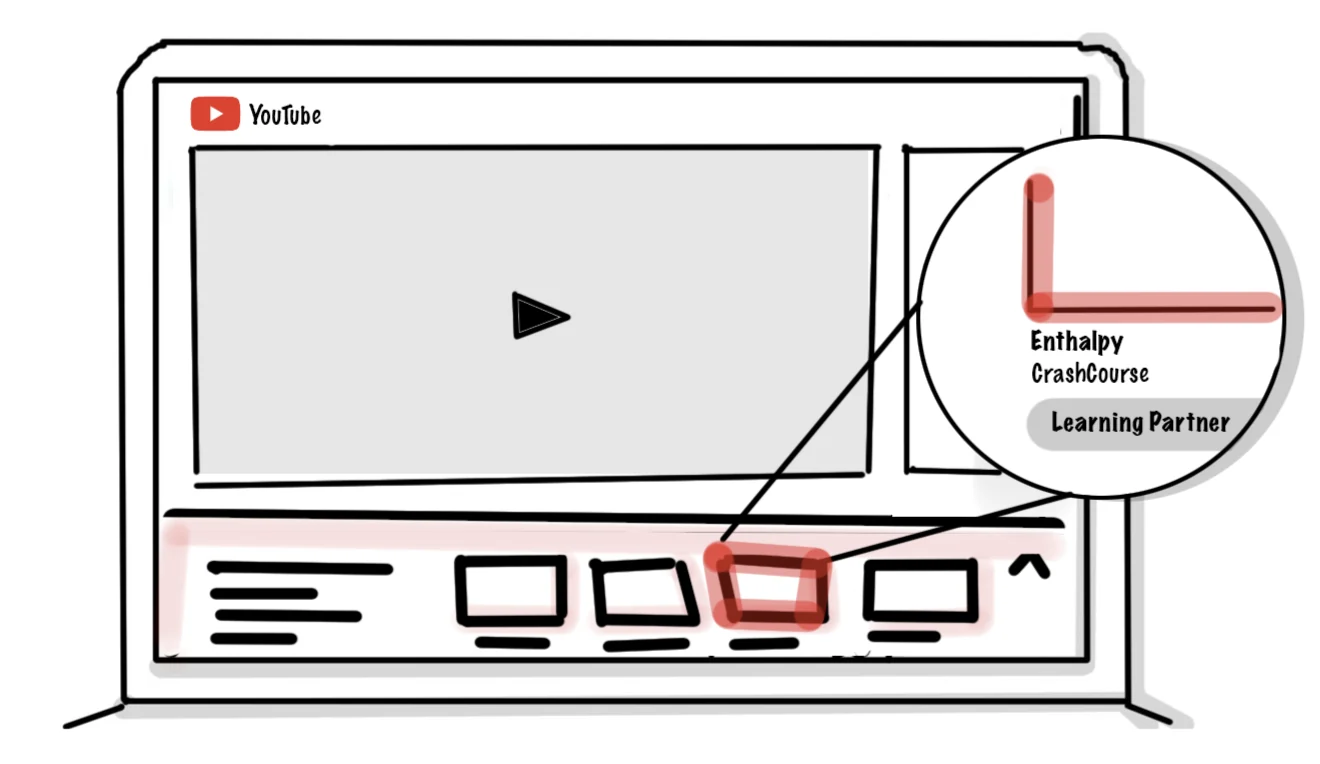
Concept sketch by Myra Liu
Learning on an open platform
In the run up to launch, research showed that organizing videos and adding a course label increased user perceptions of credibility and increased perceptions of trust regardless of the channel, a major risk in an age of misinformation. Given this, the feature was renamed and restricted to a limited release with trusted, fact-checked channels.
This work also highlighted the challenge of moving from informal to formal learning on a platform powered by user generated content. It pointed to work on content monitoring and controls over an immediate expansion of user facing features.
Outcomes
Launch at Vidcon
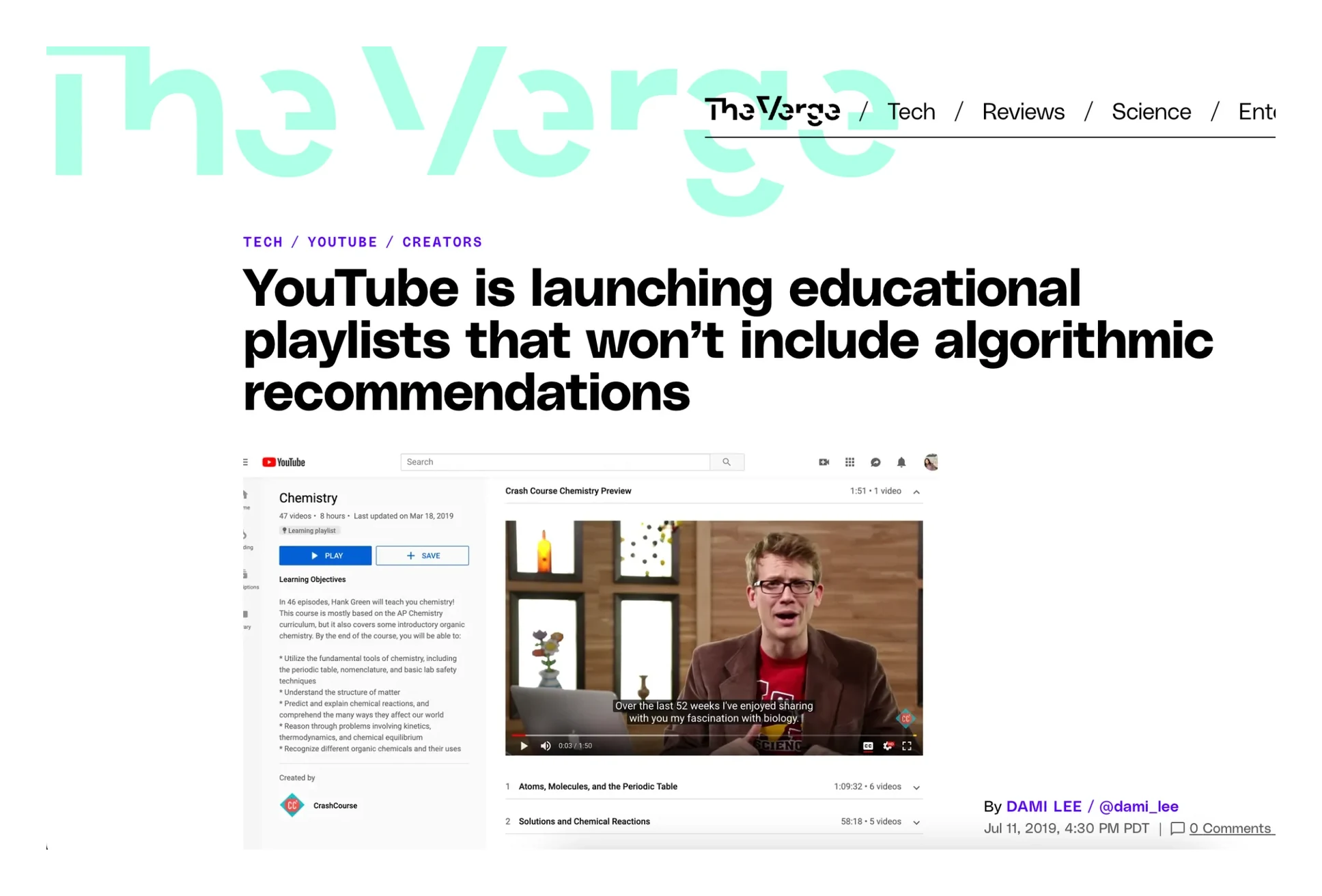
We launched under the name 'Learning Playlists' at YouTube's flagship keynote at VidCon with positive press and the support of top Edutubers.
We saw a 5% increase in learning content playlist watch time compared to the old design.
Long term learning impact
The vision for learning on YouTube paved the way for the development of other needed features. YouTube continues to launch features outlined in the learning vision.
Other results are less visible. For example, content safety was owned by a separate backend team who didn't necessarily prioritize certain spam and abuse issues in learning content. The establishment of a formal learning vertical, with user research shining a light on risks, crystallized this need and created organizational pathways to get resources directed to these issues.
Conclusion
Through this project, I gained more experience launching products within a broad landscape, while also operating within the constraints of a large, established platform.
If I had the opportunity to do it again, I’d focus the product strategy specifically on YouTube’s strengths as an informal platform instead of connecting to the broader Google landscape of formal education. By better understanding the most engaged users in Edutuber communities, we could deliver the ambitious interactive features they craved and maintain momentum by building iteratively outside a restricted set of channel partners.
Let’s work together.
If you’re looking for a multi-disciplinary leader who can adapt as the work changes, let’s connect.